
Dragons Within: Letters to a Teacher
Written By Reza
It was early morning, and the soft autumn light was streaming through the window of my practice in Solna, Stockholm. I was waiting for my first client of the day when the doorbell rang. The neighborhood postman, with his usual demeanor, handed me a stack of letters. “Hello, Dr. Elias, how are you today? A few letters have arrived for you.”
I thanked him, asked how he was doing, and went back inside. I sat down at my desk and leafed through the letters. Most of them were advertisements and various notices—the kind of thing I always tried to pay the least attention to. My gaze fell on the photographs on the wall: an image of Lake Mälaren at sunset, an old picture of my father taken at the university library, and a watercolor painting of a sailboat, a gift from a former client.
Just as I was sinking into the morning silence, the office doorbell rang again. I stood up and opened the door. My first client, whom my secretary had registered as Mrs. Annika, entered. A woman with blonde hair and bright blue eyes stood there, her expression caught somewhere between worry and hope. Behind her, a tall teenager with brown hair was standing by the window at the end of the hallway, scrolling through his mobile phone.
“Dr. Elias? I’m Annika, Oliver’s mother. Actually, I wanted to book the appointment for my son, but I made it under my own name with your secretary. Oliver and I moved from Estonia to Sweden about six months ago. My husband is still in Tallinn. Oliver is seventeen years old, and he’s enrolled in school here in Stockholm, but…” She paused briefly and glanced back, as if to make sure her son couldn’t hear her. “But he’s been a bit unwell. He doesn’t study properly, he’s having trouble adjusting to school, and he’s been keeping his distance from the other children. Even though he attends a bilingual school here, and I’ve spoken Swedish with him since childhood, and he practiced English very well when we were in Tallinn and has good communication skills, he says he’s been struggling with some inner contradictions lately. It seems he needs someone to talk to, someone who can explore these contradictions. I heard from a friend that you’re familiar with existential therapy, so I thought you might have a deep understanding of these kinds of inner conflicts.”
I said calmly, “Welcome. Please come in. Would you like us to talk together, or would you prefer Oliver to come in directly?”
Annika thought for a moment. “Let him speak with you directly from the start, so there are no preconceptions. I’ll wait outside and send Oliver in.” After a few quiet words of encouragement heard from behind the door, Annika left, and moments later, the teenager—whom I now knew as Oliver—entered the office and sat down.
As his mother had mentioned, he looked about seventeen, but his face carried stories far beyond his years. In his blue-gray eyes, you could see both the quiet majesty of Sweden’s lakes and the cold depth of his fatherland Estonia’s turbulent history. I didn’t want to prejudge, but my intuition told me he was a product of this fusion: the blood of the peace-loving people of Sweden’s forests and lakes, mingled with the blood of a people who had stood for centuries under the shadow of various empires—steadfast and strong, yet wounded.
The initial silence of sessions is always long. I don’t rush. His gaze fell on a small wooden boat sitting on my bookshelf, as if it reminded him of something.
A few moments passed as he sat on the sofa across from me. Oliver had placed his hands on his knees and was staring at the colorful rug beneath his feet. I broke the silence.
“So, Oliver… how are you? How did you wake up this morning?”
He lifted his head and glanced at me briefly. “I’m okay… I think. Mornings are always a bit hard for me to wake up.”
“That’s natural. Especially for someone who’s just moved to a new country. By the way, what grade are you in?”
“11th. Påhlbergskolan in Stockholm. It’s nearby.”
“Ah, that’s a good school. I’ve seen a few of their students here. How are your classes? Managing with the lessons?”
He shrugged. “It’s tolerable. A bit different from the school I went to in Tallinn. That one was international; we spoke more English. Here, they speak Swedish too, so it’s a bit hard at first.”
“Natural. What about friends? Have you been able to make new friends?”
For the first time, a small smile appeared on his lips, though it faded quickly. “One or two. A boy named Lars sits next to me in math class. He’s cool. There’s also a girl named Elin who’s in the same library group. But…”
“But?”
He paused, as if kneading the words behind his lips. “I don’t know. Friendship here is different. Lighter. Everything seems more superficial. In Tallinn, I knew kids more deeply. Maybe because the school was smaller. Maybe because we all kind of… felt like outsiders.”
I leaned forward slightly and said with a warm tone, “It seems you have a special experience of the difference between these two places. Would you like to tell me more about it?”
Oliver took a deep breath. His gaze went to the window, to the yellow and orange autumn trees outside. It didn’t take long before he turned back and looked me directly in the eyes. In that moment, I knew we were entering a deeper part of the conversation.
“Doctor… I think I have a replacement. No, maybe it’s better to say I have two hearts in my chest. One wants to believe with all its being that the world is a safe place, and the other constantly whispers in my ear: ‘Be vigilant, don’t be fooled.'”
I was silent for a few moments, letting the weight of his words sink in. He was much more perceptive than his age. Sometimes we underestimate the teenagers of this era, but Oliver spoke with real maturity. Then I said softly, “That’s an interesting feeling. It’s like you have two voices, each trying to convince you. Can you tell me more about where these voices come from? Do you see them on social media, or is it just an inner feeling?”
Oliver reached his hand behind his neck and massaged it slightly—a nervous gesture, but familiar for someone wanting to speak from a deep place.
“No, doctor, I don’t really like following social media. You know, these days so many people are caught up in it, but because of my previous school in Tallinn where mobile phone use was banned, I managed to stay a bit away from it, so I’m not too dependent. The truth is, all of this goes back to where I grew up. Tallinn. I was there until last year, in an international school. Children of diplomats, businessmen, intellectuals… all kinds of people were there. My mother was a teacher, my father worked in the cultural sector. We had a good life. But…”
“But what?”
“I don’t know. When I was in Estonia, I felt more secure.”
“You mean when your parents were with you, you felt safe? Maybe now that your father is far away, you feel some insecurity. Could that be?”
“No, doctor, honestly, my father is very busy with his work and spends most of his time on it. We video call two or three times a week.”
“Well, maybe someone else was there? Like your friends… Tell me, who do you miss? That is, if you miss anyone.”
“I don’t know, but I really loved my grandfather. I wish he was with us.”
“How interesting. Your maternal or paternal grandfather?”
“My paternal grandfather, who is in Estonia. Jaako. My father’s father. He lives outside the city, in a forested area near Tallinn. That’s where I really grew up.”
His eyes brightened. It was as if mentioning his grandfather brought warmth back to his words.
“Grandpa Jaako…” He paused and smiled, this time a real smile. “His hands were always calloused, from working in the garden and fixing old things. But his eyes… his eyes were something else. It was as if they were gazing across all the frozen plains of history. When he looked at you, you felt he could see right through you—not just you, but everything you could become.”
“What kind of person was he?”
“He was a special person. He always told stories, and in his stories, I was a little scared. He never directly spoke about fear. Never. But his stories were always full of shadows. You know, those winters that got so cold that the food supplies would freeze and run out. Or the sound of airplanes passing over the house, and he would say: ‘This sound means something in the world is changing, son.’ Or the silence that would suddenly be broken by the sound of soldiers’ footsteps… There was always a hint in his tales, a warning.”
“It seems he taught you a lot.”
“Yeah. He taught me how to read animal tracks in the forest. How to make a fire when the wind is blowing. How to predict the next day from the shape of the clouds. But…” His voice faltered. “Deep down, I always knew these weren’t just skills. It was a kind of preparation. Preparation for surviving in a world that is… unpredictable. His love was deep, very deep. But there was a kind of cautiousness in it. As if behind every kindness, there was a hidden warning: ‘Be careful, the world isn’t always as beautiful as you think.'”
I took some notes and said, “And your mother? Annika? Her perspective seems different.”
He smiled, this time more bitterly. “My mother is completely different. She’s from here, Sweden. She grew up in an open, free environment, where instead of telling you to watch out for dangers, they say go explore your opportunities. She always says: ‘The world is full of wonders waiting to be discovered. Even the darkest forests of Sweden are full of beautiful creatures and shining lakes.'”
“It seems you’re caught in a contradiction between these two views.”
Oliver nodded, heavy and deep. “Exactly. You know where the problem is? Grandpa’s voice is always stronger. Because it aligns with what I read in history books, with what I felt in the silence of the people in Tallinn.”
I thought to myself that this was a collective fear manifesting in this teenage boy. A kind of cellular memory. As if centuries of occupation, war, and regime changes had seeped into their bones.
I asked him, “What does your mother say?”
“My mother says this is the past, it’s over. But Grandpa says the past can always come back, it just changes its form.”
I leaned back in my chair and said, “So you’re caught between these two attitudes. One tells you the world is safe, go ahead. The other tells you to be vigilant, history repeats itself. And you love both, you believe in both.”
For the first time, Oliver’s gaze met mine directly and openly. “Exactly. And now here in Stockholm, in my new school, the same story is repeating itself.”
I asked him what he meant, how it was repeating.
Oliver paused for a moment and said, “I don’t know.”
I suggested that maybe he could tell me about a normal school day.
Oliver described his entire day for me, in full detail. Until he got to French class and physics class. Suddenly, in the middle of his story, he said: “Doctor, I have a problem with two teachers. One of them is like my mother, one is like my grandfather. And again, I’m stuck not knowing which one to believe.”
I found this interesting. I moved slightly forward on the sofa and said, “You said in your new school you have two teachers who are like your mother and your grandfather. Tell me about them.”
Oliver’s eyes gained a special sparkle. It was as if he had just remembered he had something interesting to share.
“Yeah. The first one is Mrs. Anita. She’s our French teacher. She’s originally from Hungary, from a small town near Budapest.”
When he mentioned Hungary and Budapest, I unconsciously remembered my friend Irvin’s story, “The Hungarian Cat Curse” from the book “Momma and the Meaning of Life.” It’s a lovely story. Right there, I thought to myself, maybe this is also a sign, these hidden connections that exist between people and stories.
Oliver continued: “You know, Mrs. Anita’s classroom has a special smell… the smell of paint, clay, and old papers. There are always art supplies in one corner of her room, and old illustrated books in another corner. When you go there, it doesn’t feel like you’re in a school at all. It’s like you’ve stepped into your dream house.”
I smiled and said, “It sounds like a beautiful place.”
“It is beautiful, but there’s something even more interesting. Mrs. Anita loves box breathing meditation and storytelling. She always tells us stories, from mythological tales to religious stories. She’s especially fond of a famous cartoon called ‘How to Train Your Dragon’ and always uses it as an example for us.”
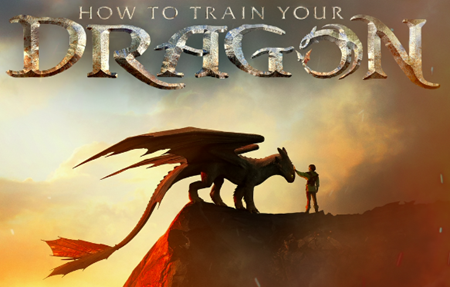
I couldn’t help but smile. “I’ve seen that cartoon too. It’s about a boy named Hiccup and a black dragon named Toothless, right?”
Oliver nodded enthusiastically. “Exactly! You’ve seen it too? Then you know the story. The Vikings think dragons are enemies that must be killed. But Hiccup does something the others don’t have the courage to do. Instead of fighting, he tries to understand them, tries to tame them with love. He gets close. Without a sword, without a spear. Just with a fish. He looks into their eyes and sees that the dragon is afraid too. The fear in its eyes is what others don’t see.”
When he said these things about dragons, I suddenly remembered Robert Moore’s book, “Facing the Dragon: Confronting Personal and Spiritual Grandiosity.” Just a few days ago, Jordan Peterson was also talking about dragons and their psychological function. Jordan is a great man; he just torments himself too much!
I leaned forward slightly. “Mrs. Anita teaches you this?”
“Yeah. Every week she talks a bit about it. She says the dragon isn’t just an animal in a cartoon. She says the dragon represents everything we’re afraid of. A math exam is a dragon. Coming to a new country is a dragon. Speaking in front of a crowd is a dragon.”
“That sounds logical.”
“Wait, here’s the beautiful part. She says there are two kinds of people. Some think you have to kill the dragon. Fight it, finish it. But the more you fight, the stronger the dragon becomes. Like… like when you run away from something, it grows bigger and bigger in your mind.”
I stayed silent for him to continue.
“But there’s another way. Hiccup’s way. You can approach the dragon, talk to it, understand it. You can feed it, pet it, become friends with it. Then the dragon is no longer an enemy. It becomes… becomes your best friend. It becomes your companion. You can ride it and fly with it.”
“Fly?”
“Yeah. Mrs. Anita says when you accept your fear and become friends with it, then you can do things you never imagined. You can look at everything from above, from a place where fear isn’t so big anymore. She says the tamed dragon is your wings.”
“That’s very interesting. Do you agree with her?”
He paused. His gaze dropped. “I don’t know. It’s beautiful, really beautiful. But… it’s a bit like a dream. Like my mother’s words.”
“And the other teacher?”
He took a deep breath. “Mr. Mölleri. Our physics teacher. He also runs the physics lab.”
“What kind of person is he?”
“He’s different. Completely different. His face always looks like nothing in his life has ever made him happy. Like he’s never tasted anything sweet. When he comes to class, we all go silent. Involuntarily.”
“What does he talk about?”
“About reality. About real things. He says storytelling is for children. The world runs on power and cold logic, not on stories. Love? Feelings? They’re weak. When the pressure of reality comes, they shatter like paper. He says the only things that remain are the laws of physics and the laws of history.”
“The laws of history?”
“Yeah. One day he was talking about small countries. He didn’t name any specific country. He just said small countries have always been pawns of great powers. That’s a fact, not something emotional. He said this fact never changes, it just changes form. One day with armies, one day with economics, one day with politics. But someone always comes who wants to take over you.”
He paused for a moment and then added softly: “Doctor… his words are more comforting to me than Mrs. Anita’s. I don’t know why. The other kids at school don’t like him, but he feels familiar to me. Somehow… it’s like I’ve known him for years.”
“And you think maybe he’s right?”
“Sometimes. Especially at night when I’m alone in my room thinking. I say maybe Mrs. Anita is dreaming. Maybe the world really is as cruel as Mr. Mölleri says. Maybe if I listen to the pretty words, I’ll become vulnerable. Maybe Grandpa was right that I should always have a vigilant side.”
For a moment I thought to myself: Maybe Mr. Mölleri also has Estonian roots. Maybe he carries that collective fear within him too, without even knowing it.
I asked him: “Don’t you think Mr. Mölleri’s words sound a lot like your grandfather’s words?”
“Yes, doctor, exactly like Grandpa Jaako’s words. Except Grandpa spoke with stories, Mr. Mölleri with formulas and laws. But the end was the same. Be prepared, because danger is always there.”
I said softly: “So you’re caught between two voices. One says go forward, tame the dragon with love. One says be careful, history repeats itself. And you love both.”
Oliver nodded. Slowly, heavily. “I love both. And I believe in both. And I don’t know which path I should ultimately accept.”
After a few moments of silence, Oliver added: “Recently I even heard that Mr. Mölleri insulted Mrs. Anita.”
“Insulted? Why?”
“I don’t know exactly, but apparently Mrs. Anita wanted to rest in the lab for a while one day, and Mr. Mölleri swore at her.”
“That’s really bad.”
“Yes, but firstly, our school principal is a deep person and has even established the school’s values on three principles: creativity, respect, and harmony. Respect is very important to him. Secondly, Mrs. Anita forgives in the moment. She always says in class that forgiveness is very important and that the first person who benefits from forgiving someone is the forgiver themselves, because they release negative energy instantly.”
Hearing this, my hypothesis about Mr. Mölleri possibly having Estonian roots grew stronger. Maybe he unconsciously sees Mrs. Anita entering his room as an invasion of his territory. Maybe he doesn’t see it as a colleague’s momentary rest, but as an attack or incursion into his land. That ancient pattern: borders, territory, fear of being taken over. Of course, these are all assumptions. I don’t even know if Mölleri has Estonian roots or not.
I glanced at the clock and said: “Oliver, we can continue the rest in our next session.”
Oliver politely said goodbye and headed for the door, where his mother was sitting waiting for him. He made an appointment for the following week.
That evening, after my last client had left the office, I sat in my chair for a time, thinking about my own past. About Estonia. About the fifteen years I too had lived there. Perhaps that’s why Oliver’s story had engaged me so deeply. With his Estonian half, he had awakened something in me that I had been trying to forget for years.
I thought that perhaps I too had unconsciously grown tired of that atmosphere of fear. The same fear that sat like a thick fog on people’s minds, without them even realizing it. I remembered old memories. People I loved, but I couldn’t help seeing the traces of fear in their beings.
I remembered Jaanus. Our elderly neighbor in Tallinn. A lonely man with trembling hands and kind eyes. Sometimes after practice I would go to his house to help him. Small errands, cleaning the yard, or sometimes just sitting and talking. One day I saw his feet were swollen and he was in pain. I offered to massage the soles of his feet. At first, he was a bit embarrassed, but then he agreed. I remember when I did this, he would close his eyes and smile. He had become like a father to me.
A month passed. I went once or twice a week and did the same thing. He never mentioned money. It seemed strange to me that someone would want to take money for helping an elderly neighbor.
Until one day, when I came out of his house, a woman was standing at the door. Jaanus’s girlfriend. Around fifty years old, with a hard face and searching eyes. She looked me up and down. Asked: “Do you come here every week?”
I said: “Yes, to help Jaanus.”
She asked: “How much do you charge for massaging his feet?”
I was taken aback. I said: “Nothing. I come to help.”
Her look didn’t believe me. She was probably thinking there must be some scheme, some hidden profit. No one helps without expecting something in return. I could see it in her eyes.
A few days later, Jaanus called and said he no longer needed my help. His voice was cold, different. I understood what had happened. His girlfriend had told him that I must have ulterior motives, that I would probably ask for money later or something. Jaanus had believed her. Or maybe deep down he too had that same fear.
I wasn’t upset that my relationship with Jaanus had ended; I was upset by that woman’s astonished look. By the fact that someone couldn’t believe unconditional kindness exists.
Another memory, a few years later. I was driving through the Narva street in Tallinn. It was winter, snow had fallen and then melted, and the street was icy. Suddenly I noticed an elderly woman who had fallen on the ground. Several people were passing by and looking at her, but no one stopped. One person even slowed down slightly, looked, and then went on.
I stopped. Got out and ran to her. Her head was wounded and blood was dripping onto the snow. I took her hand and helped her sit up. I said: “Ma’am, do you want me to call an ambulance?”
She looked at me, eyes full of pain and fear. Said: “No, son, I just want to get home. I need to catch the bus.”
I said: “I’ll take you in my car. You’re bleeding, you shouldn’t be alone.”
I helped her into the car. Ten minutes later, we arrived in front of her house. The door opened and a man about my age ran out. When he looked at me and then saw his mother with blood on her clothes, his face turned red. He clenched his fist and was about to attack me.
His mother suddenly jumped between us. Shouted: “No, son! This man helped me. I slipped on the ice and fell. If it weren’t for him, I’d still be lying on the street.”
The boy stopped. Looked at his mother, then at me. I could read it in his eyes. He couldn’t believe it. Not that we were lying, but he couldn’t believe that someone would help his mother just like that, without waiting, without wanting anything in return. He didn’t thank me. He just turned and took his mother inside.
I went back to my car. On the way home, I thought a lot. About why accepting unconditional kindness is so hard for some people. About what fear does to people’s trust.
Years later, when I came to Sweden, I felt the difference in psychotherapy practice. Here the pains were different. More existential, intuitive. Loneliness, emptiness, meaninglessness. But in Estonia, people were caught up in two types of behavior: one was alcohol consumption and superficial relationships, the other was work anxiety.
Work anxiety had a strange prevalence in Estonia. I remember having two types of clients. One group were foreigners who complained about not being understood in the work environment. They said Estonian managers focus on working hours, not results. It seemed that working had become like a drug for Estonian managers, an addiction. If they weren’t working, they felt emptiness and void.
One of my clients had an Indian friend who was an IT specialist. He had changed several jobs. He would describe how in Estonian institutions, they constantly watch the clock. It doesn’t matter what results you achieve, what matters is that you’re on time, work like a robot and stay late. For him, who believed that “work is for living, not living for work,” this mindset was unbearable. Fortunately, he eventually found an international company in Tallinn with a leadership-oriented manager, not management-oriented. A manager who saw results, not hours.
Another client of mine was an Estonian woman during her pregnancy. She had developed severe depression. But not from fear of the baby or responsibility, which is natural. She was afraid of having to stay home for a year and not work. She said: “If I don’t work, who am I?” She had a deep feeling of emptiness. After one session, I suggested she attend the twelve-step program of Workaholics Anonymous. I don’t know if she went or not. But I remembered Anna Freud’s words that denial is our greatest and most powerful defense mechanism. Many Estonians needed to accept that they were work addicts, especially managers. Of course, if the defense mechanism of denial could be broken.
I had other female clients who were constantly involved with men with behavioral addictions, especially sexual addiction. They always complained about these men, but unconsciously they seemed drawn to them. It seemed to me that a deep fear of men had taken root within them. Perhaps in the Estonian collective unconscious there is a fear of rape, a historical fear of plunder. And this unconscious fear made them choose the very men they were afraid of. I remembered Freud’s concept of the “uncanny” – that sometimes we are drawn to things we fear because they are unconsciously familiar to us.
And finally, I remembered Reza. That simple math teacher who used to come to my office in Tallinn years ago. Not for treatment, but to talk. To sit and think about things that weren’t in books. (Reza’s story can be found HERE )
But a teacher like Reza stayed. And recently he even wrote an article. An article about psychoanalysis in education in Estonia. A simple teacher, without academic affiliation, had dared to speak.
Some of my colleagues in psychology might say what business does a math teacher have writing a psychological article? I can only say: remember Melanie Klein. A woman who never had an official university degree, but became the pioneering figure of child psychoanalysis. Klein showed that understanding isn’t about credentials, it’s about the courage to look. About the bravery to see the darkness.
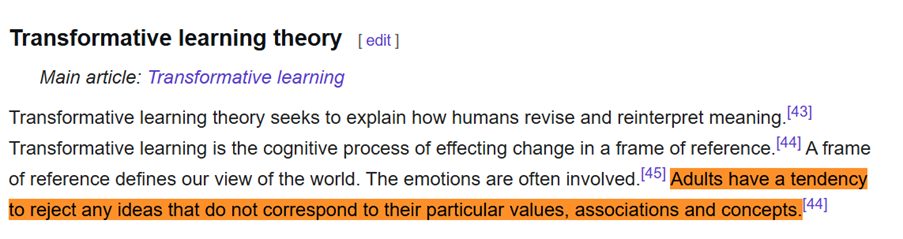
Reza is doing the same thing. With his equations, with his students, with that article he wrote. If Estonia appreciated teachers like him, teachers who teach not with conventional methods but with a transformative perspective, perhaps many things would be different. Perhaps that collective fear, that historical anxiety, would be calmer. But as experts know the transformative learning approach is hard to implement and it involves a great courage. Just Wikipedia says:
Reza stayed. And I left. Perhaps that’s the biggest difference between us.
Lucky for Mrs. Anita that she’s not in Estonia. If she were, with her dragon stories, with her transformative perspective, she would have many problems. That rigid system, that fear of innovation, wouldn’t tolerate her.
Once in Estonia, one of my Estonian teacher friends said: “Why should we make lessons interesting for children, when they’re going to go to work which is very boring?” And I was thinking about the depth of the pain. Instead of saying that we as teachers have a mission to create change, to make the innovators, the entrepreneurs who can make even in Estonia a shift in workplace, who can make work more colorful, more interesting, and more meaningful, we ourselves retreat out of fear. Why not to think like Google or Microsoft, Cisco, etc… which made the workplaces interesting for human.
Passing through these thoughts, I returned to Oliver. The seventeen -year-old boy caught between two cultures. His Swedish half that believed in the future and possibilities, and his Estonian half that carried the heavy burden of history and caution.
I remembered Mrs. Anita’s words. The Hungarian teacher who had managed to have such an impact on Oliver with the story of “How to Train Your Dragon.” I looked at my bookshelf. Several volumes of Irvin Yalom’s books were there, next to Jung’s analytical psychology books. Irvin’s book: “Existential Psychotherapy“… Yes, perhaps it was time to use a story-centered approach to help Oliver. Especially for a teenager who had connected so well with metaphors and stories.
Since I didn’t have time to watch the film again, I checked the story summary online. For a moment I thought, what would someone think if they came into the room and saw an old psychologist reading a summary of a children’s cartoon? I smiled and continued. 😊
Hiccup, the boy who instead of fighting the dragon, tried to understand it. Approaching without weapons, just with a fish and faith. Looking into the dragon’s eyes and seeing the fear there, not just the anger. This could be the key to working with Oliver.
He too had two dragons: one was the fear of history repeating itself, inherited from Grandpa Jaako, and the other was the anxiety of being away from home and the pressure to succeed in a new environment. Perhaps it was time to teach him how to face his dragons instead of fleeing or fighting.
I wrote myself some notes. Questions I wanted to ask in the second session. The idea of letter writing came to mind. A technique I sometimes used when working with adolescents. Writing to someone who is no longer here, or to a part of ourselves, can clarify many things.
I said to myself: “Oliver, when I see you, I hope we can together recognize your dragons and tame them.”
A week later, Oliver arrived on time.
This time he seemed a bit more at ease. He placed his backpack next to the sofa and sat down. His gaze wandered more around the office this time—to the paintings, to the bookshelf, to the small figurines on the windowsill.
“So, Oliver, how was your week?”
“It was tolerable. I had a math exam. I think I did well.”
“Excellent. You know, I’ve been thinking a lot about what you said last week. Especially about Mrs. Anita and the story of Hiccup.”
His eyes sparkled. “Yeah? How so?”
“Well, I thought maybe we could use that same story to help you. You said yourself that you have two dragons. One you got from Grandpa Jaako, and one from here—from your new school and new environment.”
“Two dragons?”
“Yes. One is the dragon of history and fear. The other is the dragon of homesickness and anxiety in the new environment. They both come to you, don’t they?”
Oliver thought for a moment, then nodded. “Yeah… you’re right. Some nights they both come. One says, don’t forget what Grandpa said. The other says, this is Sweden, you have to prove yourself, you can’t fail.”
“And what do you do with them?”
“I don’t know… I try not to listen to them. But I can’t. They always come.”
I said softly, “What did Hiccup do with the dragon?”
He smiled. “He got close to it. Looked into its eyes.”
“Exactly. So maybe it’s time for you to get close to your dragons too. Not with a sword, not by running away. With something else.”
“With what?”
I paused for a moment, then said, “I want us to try something. Do you think you could write two letters today, during the session?”
“Letters? To whom?”
“One to Grandpa Jaako. Tell him whatever you want. Things you’ve never been able to say to him. Questions that have stayed in your mind.”
His eyes softened. “To Grandpa… I can write that.”
“And the second one, write to one of your dragons. Whichever you prefer. Give it a name. Tell it why it came, what it wants from you. And then… then try to answer yourself from the dragon’s perspective. Like Hiccup talking to Toothless.”
“Answer myself from the dragon’s perspective?”
“Yes. You see, that dragon might have things to tell you that you’ve never heard. Maybe it just came to remind you of something. Something you need for your life.”
Oliver paused for a long moment. He stared out the window, at the yellow and orange autumn trees. Then he turned back and said, “Okay. I’ll try.”
I gave him half an hour to write the letters. He started on the first one, and I began organizing my desk. I knew he was a smart boy, and although some of my colleagues might criticize me for moving too fast, I like to work quickly with adolescents. They have more active neuroplasticity and can heal faster than adults. Since I had no clients after Oliver, I had even intended to go beyond the standard forty-five minutes if needed, to stay with him.
After thirty minutes of silence and presence, Oliver brought the letters to my desk. He sat on the sofa and handed me both.
The letters were written like this:
First Letter:
“Dear Grandpa,
Do you remember that winter when so much snow had fallen that we couldn’t go to our house, and I stayed with you? You taught me how to find rabbit tracks in the snow. You said the rabbit always comes from a safe place and goes to a safe place. You said a person must find their safe place.
Grandpa, I know your love. I know that every story you told, every warning you gave, was so that I wouldn’t get hurt. I know that the years you lived through—war, occupation, fear—taught you that you should always have a vigilant side.
But Grandpa… this is Sweden. People live differently here. Mom says I can be hopeful about the future. She says the world isn’t just a place of fear.
Sometimes I get confused. I don’t know which path to take. I want to be vigilant like you, but I also want to be free like Mom. Can I have both, Grandpa? Can I be both vigilant and free?
I miss you. Every day.
Oliver”
When I finished reading the first letter carefully and reached the final part—the question he had asked: “Can I be both vigilant and free?”—my gaze met his eyes, which were waiting for my reaction. But I paused and read the second letter. It said:
Second Letter:
“Dear Vihuris,
You come every night. You say I have to be the best. You say if I make a mistake, everyone will understand that I don’t belong here. You say strangers don’t have the right to make mistakes.
Why do you push me so hard? Why won’t you let me breathe? When did you come into my being? From the moment I set foot here? Or were you there before?
I’m tired of you. But… somehow I’m afraid of you not being here. Maybe you’re right. Maybe I really shouldn’t make mistakes. Maybe people here don’t show mercy to strangers.
What do you want from me?”
After finishing the second letter, I was genuinely impressed by the way he wrote. He was truly a talented and intelligent boy. Vihuris. What a beautiful name he had chosen for his dragon!
When we was done, I said: “Now it’s time to answer. Remember I said to answer yourself from the dragon’s perspective?”
“Yeah… but I don’t know how.”
“Let’s try together. Close your eyes. Imagine Vihuris. What does it look like? What color is it?”
He closed his eyes. A few moments later he said: “It’s gray. Dark gray. Its eyes are red but… there’s a light in them. Not a bad light, a kind of… a kind of sad light.”
“Look at it. Ask it why it came.”
He was silent. Then he said softly: “It says it came to teach me… to teach me that I can. It says its pressure is so that I know how much power I have.”
“Listen to what it says. Let it speak.”
A few moments later, Oliver opened his eyes. There was a small smile on his lips. “Doctor… I think I understand. Vihuris isn’t my enemy. It’s… it’s a part of me that wants me to be my best self. It just doesn’t know the way. It pushes so hard that it suffocates me.”
“Now you can answer it. From yourself.”
I gave him paper and pencil again, and gave him another ten minutes. After ten minutes, he finished his letter, and I asked him to read it to me.
Third Letter:
“Dear Vihuris,
I understand why you came. You want me to be strong. You want me not to fail here, in this new country. Thank you.
But please… a little slower. Let me breathe. Let me make mistakes. Let me learn. I promise you, I’ll be my best self. But not out of fear—out of love for myself.
Let’s be friends. Like Hiccup and Toothless. You can give me strength, and I can give you peace.
Agreed?”
When he finished, he placed the letter on the table. He took a deep breath and said: “I feel lighter. Like I’ve put down a burden.”
“This is just the beginning, Oliver. Now it’s time for Grandpa’s letter.”
He picked up the letter and read it again. Then he said: “I think Grandpa knows the answer to this question. He just… he just couldn’t tell me.”
“What answer?”
“The same thing I understood myself. You can be both vigilant and free. You can know history like Grandpa and learn from it, but also be hopeful about the future like Mom. These two don’t fight. They can be together.”
I listened to his words and said: “It seems Oliver has understood something today that many people take years to understand.”
He smiled. “Maybe it was because of Hiccup. Maybe because I learned to talk to my dragons instead of fighting them.”
“And Mr. Mölleri? What do you think about him now?”
He thought for a moment. “Mr. Mölleri… he’s not a bad person. But I think he’s trapped by his own dragon. A dragon that tells him the world is cruel and you always have to be ready for battle. Instead of riding his dragon and flying, he’s hidden in a bunker and tells others to come there too.”
“That’s a very good analysis.”
“Mrs. Anita says some people can’t tame their dragons because they think if they tame them, they’ll become weak. But it’s the opposite. If you tame them, you become stronger.”
I was silent. Then I said: “And what do you think?”
He looked at me. There was a new light in his eyes. Not the sad light of Vihuris, but a different light. A calm light.
“I think I learned a little more today. I think I can love both Grandpa and Mom. I can know Estonia’s history and live in Sweden. I can be both vigilant and free.”
He folded the letters and put them in his backpack. As he was leaving, he turned and said: “Dr. Elias… thank you for this idea. It was a good one.”
After Oliver left, I remained in my chair for a long time. My personal notes based on his letters were on the table. The answer he had found for himself was in my mind. I was satisfied with the session. After a long workday, I felt I needed to sit down and write to someone. To someone who had been my teacher for years, even from afar. To Irvin.
I took the paper, took the pen. I opened the window to let the cool autumn air of Stockholm flow in. I began to write.
My dear Irvin,
I’ve been missing your novels lately. Not just your psychological method, but the voice that lives in your words in your novels. The way you speak of pain, as if someone were reading poetry to you, not practicing psychotherapy.
I remember when I first encountered your perspective. It was during my early university years in Tehran, in the faculty library. I took your book “When Nietzsche Wept” from the shelf, aimlessly, just because the title was familiar. Nietzsche wrote “Thus Spoke Zarathustra” my lovely book, not because I am personally from the Zarathustrianism root who is the first teacher of human, but because Nietzsche had touched my heart by his words as a storyteller. That day, with your book “When Nietzsche Wept“, I couldn’t put it down until nightfall. It was as if I had found someone who was saying things I felt deep inside but didn’t know how to express. From that night, your perspective stayed with me. A connection I never understood where it came from. Sometimes I think maybe our birth dates have something to do with it—both June 13th. A strange coincidence. But let me set aside these superstitious thoughts. The main thing is that you have been a teacher to me, even from behind the pages of books.
Today a boy came to my office. seventeen years old, with roots blending Sweden and Estonia. His name was Oliver. But his story was something beyond his name. A boy caught between two cultures, between two ways of seeing the world. One said the world is a safe place, go forward. The other whispered: be vigilant, history repeats itself. Two hearts in one chest.
And he had a French teacher, Hungarian, named Anita. A woman who taught life lessons to children through the story of “How to Train Your Dragon.” It might seem funny, Irvin. A children’s cartoon. But I worked with this boy using that very story, that simple metaphor. I asked him to write a letter to his inner dragon, and then to answer from the dragon’s perspective. What we found was deeper than any theory. He understood that the dragon is not an enemy, that it can be tamed, that you can ride it and fly.
You too are a master of story, Irvin. You’ve always said we approach truth through stories, not through formulas. Your existential method, with its emphasis on death awareness and meaning-making, has always been a guide for me. And Viktor Frankl, that other teacher of ours, who understood in the death camps that those who survive are the ones who find meaning in living. Frankl said we cannot escape suffering, but we can choose our attitude toward suffering. That’s exactly what Oliver did with his dragon. Not escape, not fight, but a change of perspective.
Here, a Hungarian teacher with a simple cartoon had done the same thing. She had expanded the boundaries of the archetypal.
Do you remember Robert Moore? The one who wrote “Facing the Dragon.” He said we are compelled to accept mythical meaning, because without it, our psychic energy has nowhere to go. Like the concept of God—if it’s not there, something else fills the void, even if it’s emptiness. The dragon that Oliver tamed was that very archetype. The same shadow that, if we don’t see it, devours us.
Irvin, I’ve been thinking about many things these days. Even about my illness, the one I’ve been enduring for ten years. If I see it as a dragon I need to tame, not kill, it’s much easier. If fourteen years ago, when I separated from my first wife, I could have seen the divorce the same way, perhaps those years would have been calmer. Perhaps.
And death. Always death. I learned this from you, Irvin. And from Frankl. In the Auschwitz camps, he saw who survived: not the strongest, but those who had a “WHY” to live for. Those who had found meaning, even among the smoke of the chimneys. Frankl said: “Those who have a ‘why’ to live for can bear almost any ‘how.'”
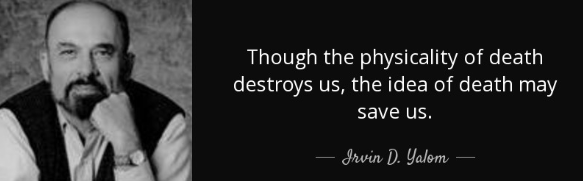
If we always fear death and run from it, our lives remain half-lived. Always in the shadow of fear. But if we have the courage to look at it, if we accept it as part of the journey, then life becomes more authentic. More meaningful. As you yourself said: “Though the physicality of death destroys us, the idea of death may save us.”
There’s something else. A criticism of ourselves, of us psychologists. Today, working with Oliver, I thought perhaps the place of teachers is much higher than ours. Perhaps if the world were filled with teachers like Mrs. Anita, there would be no need for us. If children learn in school to look at the world through the lens of story, if a teacher can transform them, what are we?
Is this not the same three metamorphoses that Nietzsche speaks of in “Thus Spoke Zarathustra”? How the human spirit becomes a camel, then a lion, and finally a child.
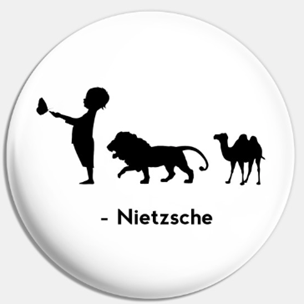
The camel, that beast of burden that kneels before the city gates to take the heaviest loads upon its back. This is the stage where we carry the “shoulds”: you should be obedient, you should preserve history, you should carry the burden of your ancestors’ fear. Oliver, with his Estonian half, was that camel, carrying centuries of occupation and fear as a burden, without knowing he hadn’t chosen this load himself.
The lion, however, wants to kill the dragon. The lion says, “I will” in opposition to “thou shalt.” The lion fights, rebels, wants to be free of chains. Mr. Mölleri, with his angry gaze and perpetual vigilance, was stuck in the lion stage. He fought, but didn’t know what he was fighting. Even Mrs. Anita, if she only fought, would be no different. But she had found another way.
And the child. The child who is beyond shoulds and battles. The child plays, creates, sets the wheel of life in motion. The child hasn’t forgotten how to befriend the dragon. Hiccup was a child who, instead of killing Toothless, befriended him. Oliver today, when he received a letter from his dragon in his own handwriting, was awakening his inner child. The child who can both carry history and be free.
And this reminds me of the final sequence of Stanley Kubrick’s “2001: A Space Odyssey.” That luminous fetus, the star child floating in a transparent womb in space, staring at Earth with open eyes. What is Kubrick saying? He’s saying that human evolution from tool-making apes reaches a point where humans must become children again to look upon their home, upon Earth, upon themselves from above. The child is not a symbol of innocence, but of rebirth. A symbol of one who has put down all burdens and can now see the world as it is, without the mediation of old fears and angers.

A while ago I attended a workshop on diversity, equity, and inclusion. The doctor giving the presentation, in the middle of his talk, spoke of his own fear. He said he didn’t want his children to receive religious education in school. Perhaps he had a right to that. But his fear was so present in his words, so evident in the questionnaire he gave us, that it was impossible not to see. That fear was his untamed dragon. And he didn’t even know it. He was stuck in the lion stage, fighting something he didn’t recognize, unaware that his inner child had not yet been born.
We psychologists are the same, Irvin. Sometimes we sit so high, so inflated with our own “knowing,” that we forget we too have dragons. Robert Moore spoke of coming down from this “inflated self.” Letting our false grandiosity transform into true higher power. Practicing humility.
I confess myself. Five years ago, when you suggested I attend the twelve-step program of CoDA, at first I laughed. Me, a psychologist, go to a meeting of Codependents Anonymous? With all its difficulty and pain, I went. And there I truly understood the depth of my childhood experiences. I understood how deeply “codependency” is rooted in me. I’m still working on myself. There’s still a long way to go.
Some of our colleagues are so arrogant that they even pathologize Jesus. They call it the savior complex. In my opinion, Jesus was a teacher, a great teacher. Perhaps greater than any psychologist. All humans love their teachers, Irvin. Because the teacher is established in our mythical view with the two concepts of humility and empathy. This shows we still live in a strange age. An age thirsty for a teacher. Perhaps we can extend Jungian archetypal concepts to the archetype of the teacher as well.
But life flows on. And you were and are my teacher, Irvin. From those books, from those words, from those stories. Frankl was also a teacher, with his great lesson: “In the death camp, those who had meaning survived.” Perhaps our mission as psychologists is this: to help people find that meaning. Not with formulas, but with stories. Not with labels, but with companionship.
Oliver found meaning today. He understood that he can be both vigilant and free. He understood that the dragon is not an enemy, but a companion. And at the end of this long day, I think of you, of Frankl, of all the teachers who taught me how to face my dragons.
Take care of yourself.
Elias
Stockholm, Autumn 2026
When I finished the letter, it had grown dark outside. I folded the paper and placed it inside one the book: “The Spinoza Problem”. I thought of my mother, of my father, of Jaanus, of that old woman in Narva, and of Reza, and of all the people who showed me fear, and of all those who taught me the way to face it.
I looked at the autumn trees outside the window. The leaves were falling, but I knew they would grow again in the coming spring. Just as fear comes and goes, if you have learned to tame it.
I said in my heart: “Thank you, Mrs. Anita. Today you reminded me why I chose this work.”